Tel:742-138-8342
Mail:sales@asimicrofluidizer.com

How are lipid nanoparticles (LNPs) for mRNA COVID-19 vaccines assembled?
Based on the development of mRNA COVID‑19 vaccines, lipid nanoparticles (LNPs) have been established as an effective delivery vehicle for RNA‑based therapeutics and vaccines. LNPs encapsulate and protect labile active ingredients, mimic low‑density lipoproteins (LDLs), and are taken up via endogenous pathways. They are pH‑sensitive and designed to release their payload into the cytosol. This will mark the first large‑scale use of nucleic acid‑based lipid nanoparticles in the history of vaccination.
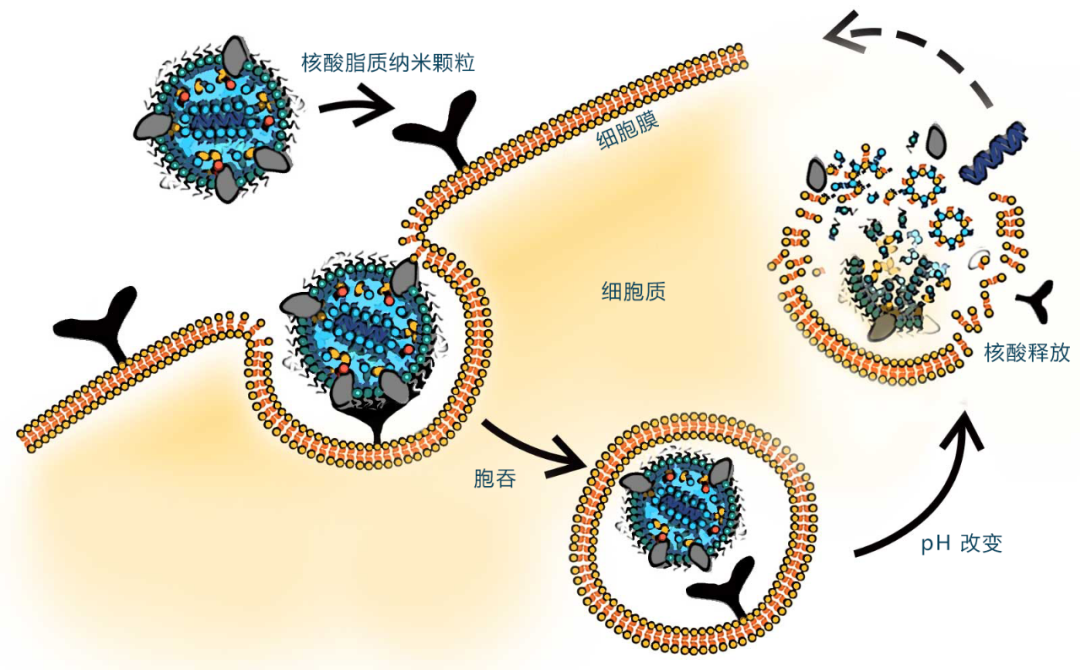
Currently marketed mRNA vaccines are largely similar in structure, though different companies use distinct molecular compositions and ratios. The key components are as follows:
① mRNA – the active substance that confers the vaccine’s therapeutic effect.
② Cationic lipid – binds to the negatively charged mRNA and serves as a critical structural component.
③ Cholesterol – facilitates LNP endocytosis and stabilizes the LNP architecture.
④ Phosphatidylcholine – a helper lipid that accelerates mRNA release during endocytosis.
⑤ PEGylated phospholipid – prolongs circulation time and enhances LNP stability.

So the question arises: with such a complex structure, how are LNPs assembled?
This is probably the biggest challenge in mRNA vaccine manufacturing.
How can we precisely control parameters such as LNP composition, particle size, flow rate, morphology, and others, while ensuring quality and accelerating production?
Various assembly methods have been reported in the literature, such as the thin‑film method and T‑junction mixing. However, these approaches suffer from low throughput and are difficult to scale up for mass production.
To address these challenges, BioNTech/Pfizer adopted the impinging jet mixing method, using the BlueShadow 80P high‑pressure pump to generate two opposing jets—one for the API (mRNA) solution and the other for the lipid solution—within a mixing chamber. Through hydrodynamic forces, the LNP components are thoroughly mixed, resulting in lipid nanoparticles that encapsulate the mRNA.
Figure: Impinging Jet Mixer (IJM)
The impinging jet mixer (IJM) required for LNP production equipment was developed and manufactured by KNAUER, a German laboratory instrument manufacturer. The IJM has been designed and optimized to meet customer performance requirements and regulatory standards. It was successfully installed and qualified in a cleanroom (Grade C). The system is pre‑equipped with all necessary interfaces for integration into a PLC system, allowing centralized control of flow rates for all units throughout the process steps. All components are mounted on a stainless steel frame to accommodate cleaning‑in‑place (CIP) procedures in pharmaceutical manufacturing.
The system includes:
• KNAUER Impinging Jet Mixer (IJM)
• Inlet lines for the lipid/ethanol mixture and the mRNA/buffer mixture
• LNP outlet line
• Cleaning system
• Frame (stainless steel, grade 1.4301)
• Technical documentation, service documents, and GMP documentation, including KNAUER installation and training materials
• Software system compliant with 21 CFR Part 11 and other regulatory documentation
• Factory Acceptance Test (FAT)
• Site Acceptance Test (SAT)
Microfluidizer Nanotechnology Limited, Company number: 13114417
| 
|
 ADD:Office Suite 29A, 3/F 23 Wharf Street London ,United Kingdom,SE83GG
  WEB:www.
 EMAIL:admin@